The Big Bang
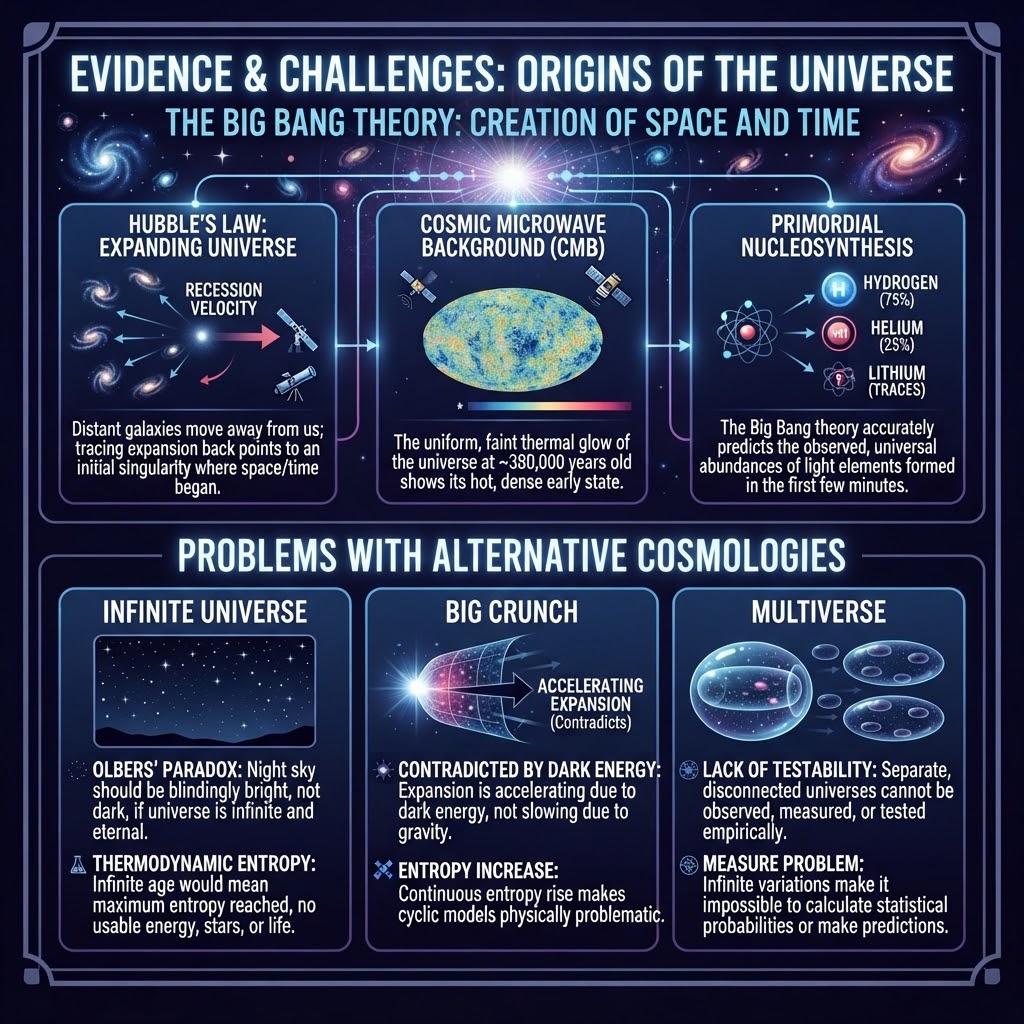
The Big Bang theory describes the origin of the universe as the creation of space and time itself, rather than an explosion taking place inside a pre-existing empty void. Several key findings support this model. First, Hubble’s Law shows that distant galaxies are receding from us in all directions, and when this expansion is traced backward in time, it points to a single initial point or singularity where space and time began. Second, the Cosmic Microwave Background radiation provides a snapshot of the universe when it was roughly 380,000 years old, revealing the uniform leftover thermal glow of a hot, dense initial state. Third, primordial nucleosynthesis accurately predicts the exact observed cosmic abundances of light elements like hydrogen, helium, and lithium, which formed during the first few minutes after the expansion began.
Regarding the problems with alternative models, the infinite universe concept faces severe theoretical hurdles. The most prominent is Olbers’ Paradox, which notes that if the universe were infinite, static, and infinitely old, every line of sight in the night sky would eventually terminate on the surface of a star, meaning the night sky should be blindingly bright instead of dark. Furthermore, an infinite and eternal universe would have already reached maximum thermodynamic entropy by now, leaving no usable energy, stars, or life to exist.
The Big Crunch model, which theorized that gravity would eventually reverse cosmic expansion and pull everything back together into a final collapse, is contradicted by the discovery of dark energy. Observations demonstrate that the expansion of the universe is actually accelerating due to the repulsive effect of dark energy, meaning gravity is far too weak to ever halt the expansion and cause a crunch. Additionally, thermodynamic laws show that entropy increases continuously, making cyclic bounce models physically problematic.
Finally, the multiverse hypothesis encounters major scientific challenges, primarily a lack of empirical testability. Because separate universes or parallel realms are causally disconnected from ours by definition, they cannot be observed, measured, or tested, placing them on the boundary of empirical science. Moreover, multiverse theories suffer from the measure problem, where probabilities become mathematically undefined because infinite variations of every possible event happen, making it impossible to calculate realistic statistical likelihoods or make testable predictions.
Who is the uncaused cause outside of spacetime?
Simulation Hypothesis
If simulation hypothesis is true, then who is our programmer?
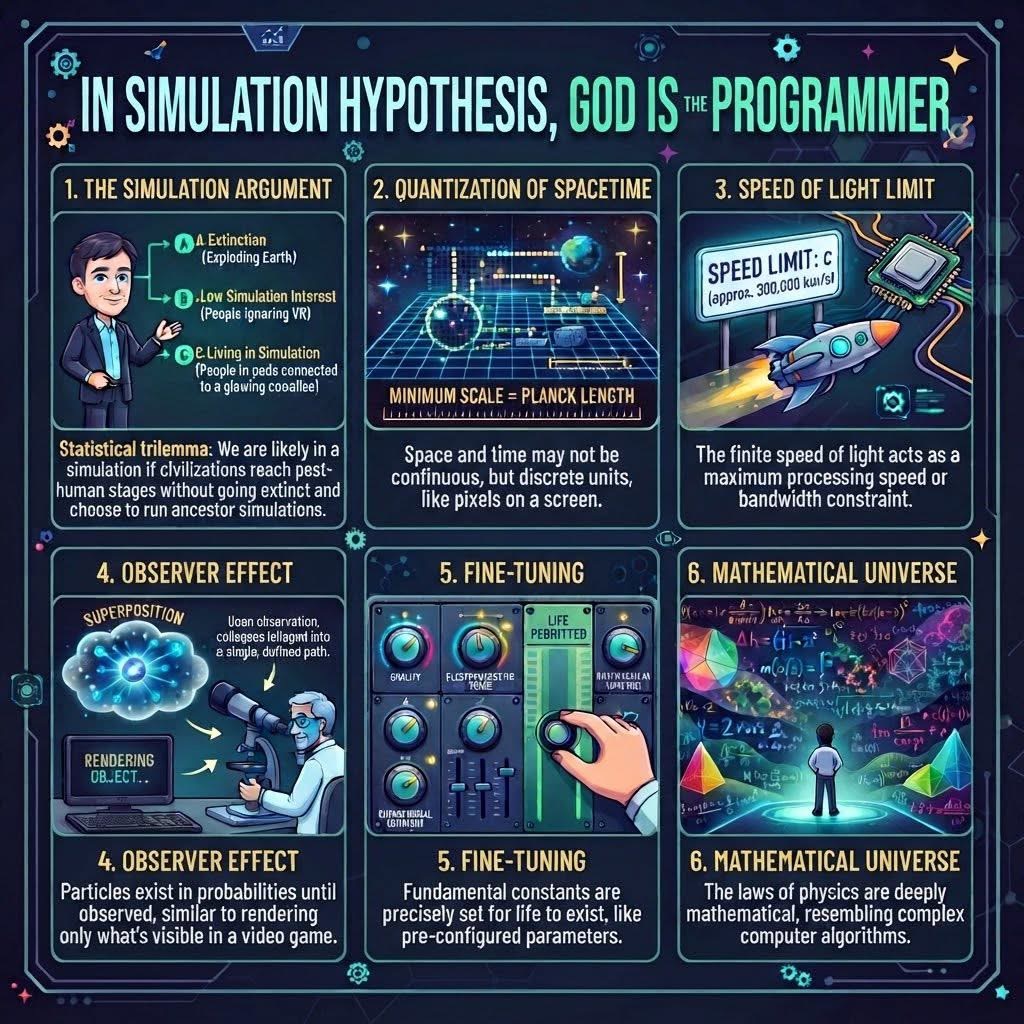
Nick Bostrom’s simulation argument proposes a statistical trilemma stating that at least one of three propositions is true: human civilizations will likely go extinct before reaching a post-human stage, post-human civilizations are vastly unlikely to run a significant number of ancestor simulations, or we are almost certainly living in a computer simulation. The quantization of spacetime, such as the existence of the Planck length and Planck time, suggests that space and time are not continuous continuous dimensions but are instead discrete units, much like pixels on a computer screen or the resolution limit of a digital rendering. The finite speed of light acts as a universal speed limit, which could be interpreted as a processing speed or bandwidth constraint of the underlying hardware designed to prevent system overloads. The observer effect in quantum mechanics, where subatomic particles exist in a superposition of probability states and only collapse into a definite physical reality when measured or observed, parallels how video games only render environments or objects when a player’s camera is directed at them to conserve computational power. The extreme fine-tuning of fundamental physical constants and laws of physics required for complex chemistry and life to exist can be viewed as pre-set parameters or configuration settings established by a programmer. The deep mathematical structure of the universe, where physical laws can be precisely and universally expressed through complex equations and algorithms, mirrors computer code. Finally, anomalies such as the Greisen-Zatsepin-Kuzmin limit, which sets a maximum energy threshold for cosmic rays traveling through space, resemble artifacts of a discrete spatial grid or computational cutoff in physics models.
String Theory
If a conscious being existed in the 9th dimension of space in string theory, what powers would they have over our human existence in this universe?
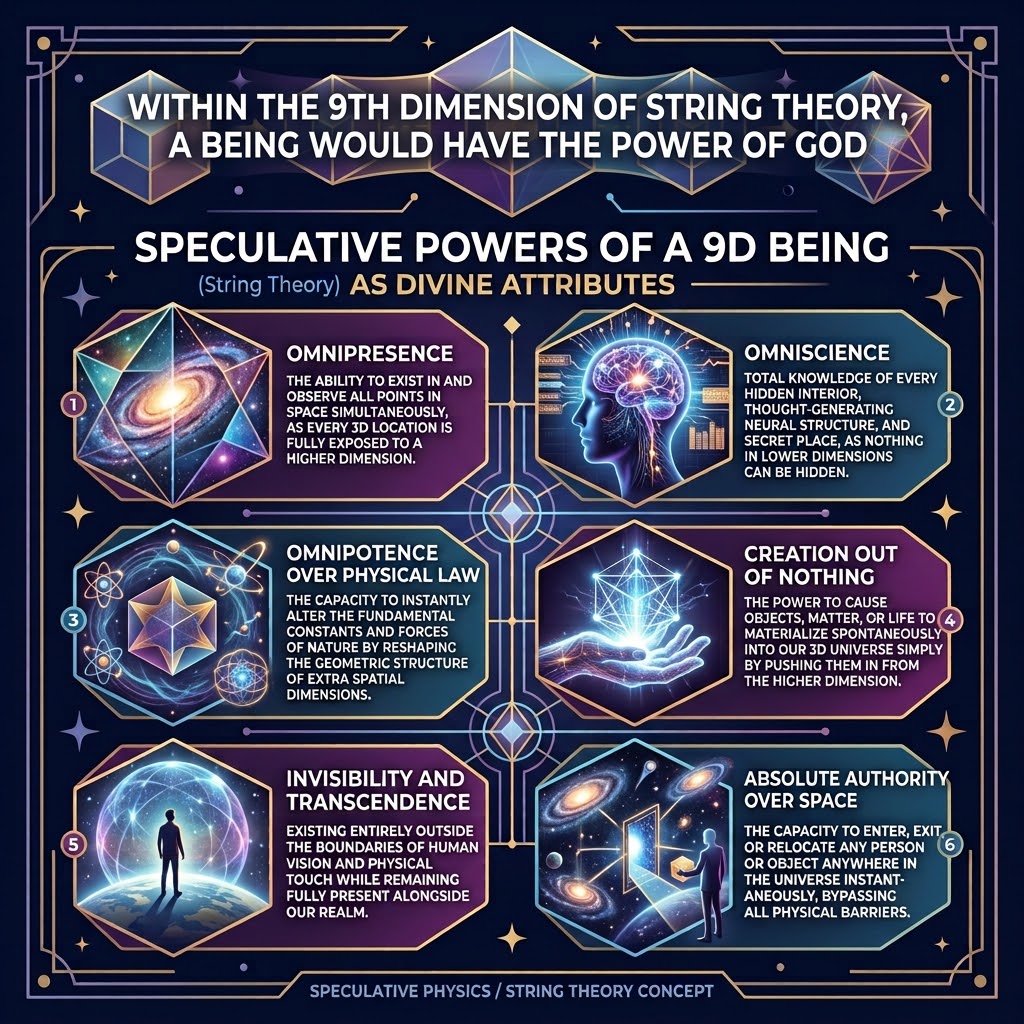
- Omnipresence: The ability to exist in and observe all points in space simultaneously, as every 3D location is fully exposed to a higher dimension.
- Omniscience: Total knowledge of every hidden interior, thought-generating neural structure, and secret place, as nothing in lower dimensions can be hidden from higher-dimensional sight.
- Omnipotence over Physical Law: The capacity to instantly alter the fundamental constants and forces of nature by reshaping the geometric structure of extra spatial dimensions.
- Creation out of Nothing (Ex Nihilo): The power to cause objects, matter, or life to materialize spontaneously into our 3D universe simply by pushing them in from the higher dimension.
- Invisibility and Transcendence: Existing entirely outside the boundaries of human vision and physical touch while remaining fully present alongside our realm.
- Absolute Authority over Space and Time: The capacity to enter, exit, or relocate any person or object anywhere in the universe instantaneously, bypassing all physical barriers and distance.
Who is the uncaused cause outside of spacetime?
DNA
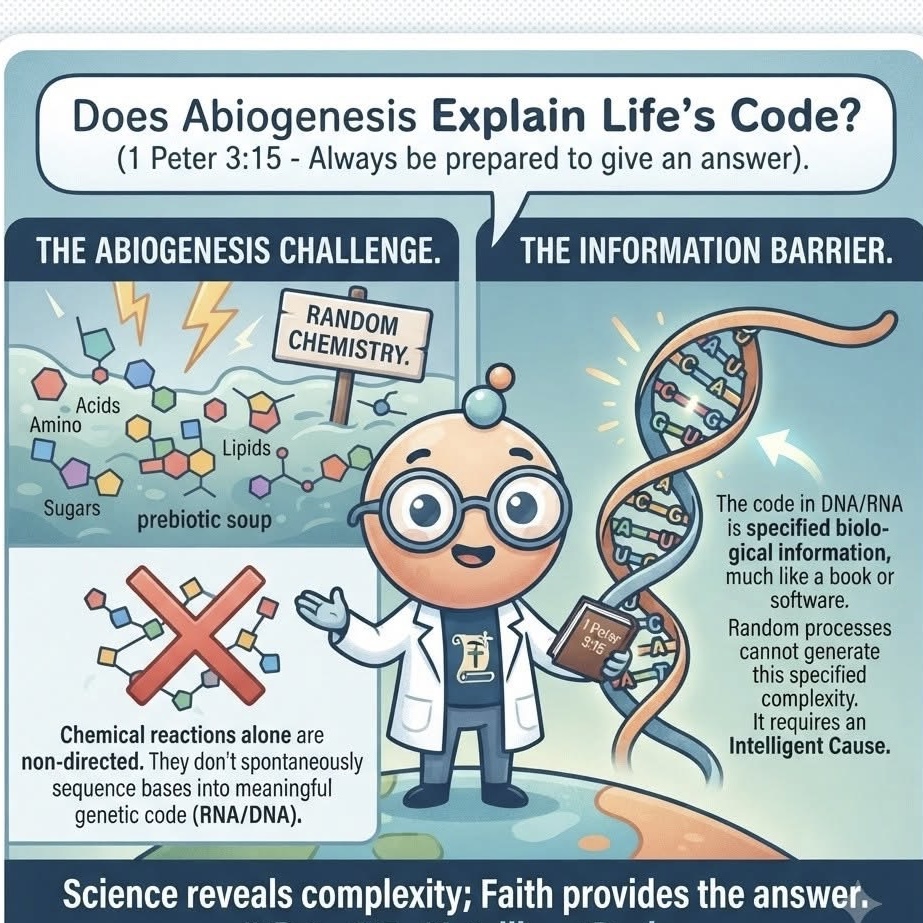
Life Requires Sequencing, Not Just Molecules
It’s easy to focus on the raw building blocks of nature the amino acids, nucleotides, and atoms floating in the primordial soup. But simply having the molecules present isn’t enough to create life. DNA and RNA aren’t just chemical compounds; they are information systems. To build a functioning, self-sustaining living organism, those molecular “letters” must be precisely sequenced into functional instructions.
This distinction between matter and information is central to the debate over the origins of life. Intelligent Design advocates point to the precise, symbolic nature of the genetic code where DNA transcribes to RNA, which translates into functional proteins as direct evidence of a purposeful designer.
The central argument is simple:
- All complex functional code in our experience originates from an intelligent sender/coder.
- DNA functions as a functional, symbolic code.
- Therefore, DNA is evidence of an intelligent origin.
The Challenge: Can You Name Code Without a Coder?
When evaluating this argument, it helps to eliminate common false equivalencies:
- Crystals & Ice: Governed by simple, repeating physical laws (order, but low information capacity).
- Watches & Machines: Complex and mechanical, but physically designed structures rather than abstract language systems.
True code requires a symbolic mapping system where a specific sequence of characters directs an action independent of the physical nature of the characters themselves. In biology, three mRNA bases (a codon) translate to a specific amino acid.
Key Perspectives on the Origins of the Code
Depending on your worldview, there are various hypotheses:
The Information-First View (Intelligent Design)
Under this view, chemical laws alone can account for how molecules bond, but they cannot explain how they were arranged into a specific, high-information sequence. Just as physics and chemistry explain how ink sticks to paper without explaining the text of a novel, physical laws explain the bonds between nucleotides without explaining the sequence itself. The presence of abstract, functional information points to an intentional agent.
Where Do You Stand?
The question of whether biological sequence implies a conscious coder remains one of the most compelling intersections of philosophy, information theory, and molecular biology.
Does the information stored inside every living cell point back to an intentional Mind?
Who is the sequencer of the human genome?
“Junk DNA”
No, “junk DNA” does not mean it is completely useless.
The term was coined decades ago when scientists focused almost entirely on the ~1–2% of human DNA that directly codes for proteins. Everything else was labeled “junk” or “non-coding DNA” simply because its purpose wasn’t understood yet.
Today, geneticists know that a massive portion of non-coding DNA plays crucial functional roles.
Key Functions of “Non-Coding” DNA
Gene Regulation: Promoters, enhancers, and silencers act as the “software” or master switches of the genome. They dictate when, where, and how much of a specific protein a cell should produce.
Functional RNA Production: Large stretches of non-coding DNA generate specialized RNA molecules (like microRNAs, tRNAs, and rRNAs) that help build proteins or regulate gene expression directly, rather than making proteins themselves.
Structural Support: DNA sequences like telomeres (the protective caps on the ends of chromosomes) and centromeres (the structural centers) prevent DNA degradation and enable proper cell division.
3D Architecture: Non-coding regions dictate how DNA folds inside the cell nucleus, bringing distant genes into physical contact with the regulatory machinery they need to function
Who is the sequencer of the human genome?
Protocells
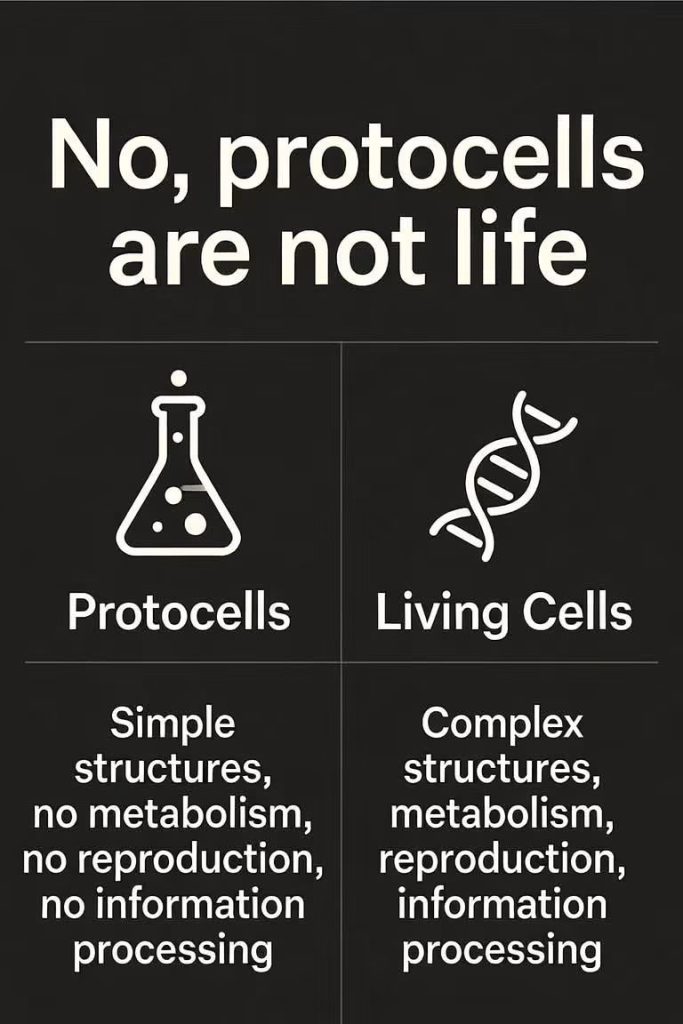
Why Protocells Are Not Living Cells.
No, living cells have not been made in abiogenesis research.
When you shake a bottle of vinaigrette, oil droplets form, trap tiny pockets of vinegar, and float around. If you squeeze them through a tight space, they split into smaller droplets.
If you add RNA building blocks to a test tube of these fatty acid bubbles, the RNA gets trapped inside. The bubbles absorb more lipids from the water, grow larger, and mechanically split.
To a casual observer, these structures—known in origin-of-life science as protocells—look uncannily like living cells. They have boundaries, hold genetic material, grow, and divide.
Yet, ask any biophysicist or evolutionary biologist, and they will give you a firm answer: Protocells are not alive.
Understanding why protocells fail the test of life reveals one of the most fascinating concepts in science: the vast chemical gulf between a system that mimics life and a system that actually possesses it.
- Physics vs. Function: The Passive Passenger Problem
The defining feature of a living cell is active agency. A living bacterium doesn’t just passively drift through its environment; it consumes nutrients, pumps out waste against concentration gradients, repairs its own walls, and controls when and how it divides.
Protocells, by contrast, are entirely passive slaves to physics and thermodynamics:
Growth: A protocell grows because hydrophobic forces cause free-floating fatty acid molecules in the water to stick to its membrane. It isn’t “feeding”; it is undergoing a thermodynamic energy reduction.
Division: A protocell divides because physical shear forces—like water turbulence or squishing through a porous rock—force a stretched bubble to pinch in two.
Permeability: A protocell takes in building blocks only because its primitive fatty acid wall is chemically “leaky”.
If you take a living bacterium and remove its environmental food source, it will actively alter its gene expression to survive. If you change the environment around a protocell, it simply stops growing or dissolves. It lacks the internal machinery to respond to its world.
- The Missing Link: Metabolism
A living cell is an open thermodynamic system that maintains homeostasis—a stable internal environment distinct from the outside world. It achieves this through metabolism: a continuous network of chemical reactions that harvests energy (like ATP) to build cellular structures and combat entropy.
Living Cell Energy Flow
- Nutrients are brought into the cell via active transport.
- The internal metabolic network processes these nutrients to generate ATP energy.
- ATP powers protein synthesis.
- Synthesized proteins drive continuous structural repair and cellular maintenance.
Protocell Energy Flow
- Nutrients passively leak through the primitive fatty acid membrane.
- Uncatalyzed chemical reactions occur without producing usable ATP energy.
- Waste products accumulate inside the membrane over time.
- Without energy or machinery, no self-repair takes place, leading to eventual degradation.
Protocells have no true metabolic engine. While some laboratory protocells can encapsulate basic chemical reactions, they cannot extract environmental energy to fuel their own maintenance. Without metabolic power, a protocell cannot actively synthesize its own membrane or build complex molecular tools from scratch. It is entirely dependent on the pre-existing organic molecules trapped inside it.
- The Coupling Crisis: Code Without Control
In a living cell, genetic code (DNA/RNA) and physical structure (proteins/lipids) are tightly coupled. The sequence of steps flows sequentially:
- DNA stores the genetic instructions.
- DNA is transcribed into RNA.
- RNA is translated to synthesize Proteins.
- Proteins actively construct, maintain, and regulate Cellular Structure & Function.
In a protocell, this feedback loop does not exist.
A protocell might hold a strand of RNA inside its membrane, but that RNA is just a passenger. The sequence of nucleotides in the RNA does not dictate the composition of the lipid wall, nor does it direct the protocell’s division.
Until the genetic material inside a compartment actively codes for tools that alter, protect, or replicate that specific compartment, true Darwinian evolution cannot begin. A protocell with “useful” RNA looks physically identical to a protocell filled with random chemical garbage.
- Protocells vs. Living Cells: The Chemical Gap
Comparing their core mechanics highlights how far protocells remain from true biology across key structural areas:
Membrane Structure: Prebiotic protocells rely on simple, leaky fatty acid walls, whereas modern living cells possess complex phospholipid bilayers embedded with active protein gates.
Genome Composition: Prebiotic protocells hold fragile, short RNA strands, whereas modern living cells maintain stable, double-stranded DNA genomes.
Replication Mechanism: Prebiotic protocells rely on environmental physics such as heat cycles and fluid shear, whereas modern living cells use highly regulated internal enzymatic machinery.
Energy Harvesting: Prebiotic protocells have no active energy harvesting system, whereas modern living cells rely on active metabolic networks generating ATP.
Environmental Response: Prebiotic protocells undergo passive degradation or swelling, whereas modern living cells exhibit homeostatic regulation and active adaptation.
The Bridge Between Physics and Biology
A protocell is not a living cell for the same reason a pile of bricks and lumber is not a house. It has the right materials in the right place, but it lacks the internal architecture, energy, and organization required to hold itself together.
SpudCells
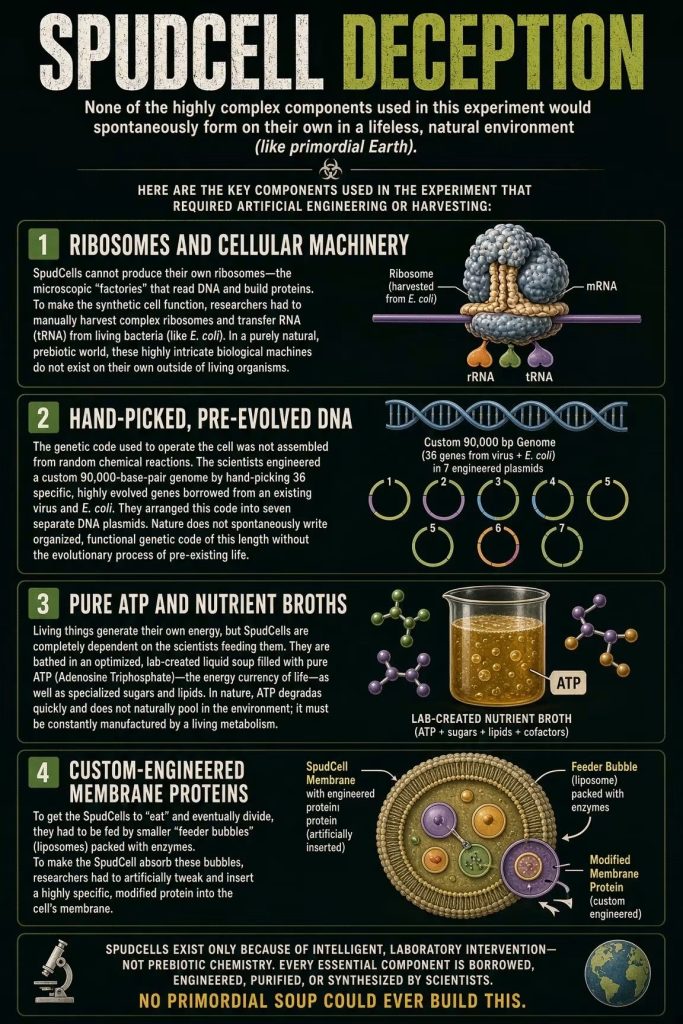
SpudCell Deception: None of the highly complex components used in this experiment would spontaneously form on their own in a lifeless, natural environment (like primordial Earth).Here are the key components used in the experiment that required artificial engineering or harvesting:1. Ribosomes and Cellular MachinerySpudCells cannot produce their own ribosomes—the microscopic “factories” that read DNA and build proteins. To make the synthetic cell function, researchers had to manually harvest complex ribosomes and transfer RNA (tRNA) from living bacteria (like E. coli). In a purely natural, prebiotic world, these highly intricate biological machines do not exist on their own outside of living organisms.2. Hand-Picked, Pre-Evolved DNAThe genetic code used to operate the cell was not assembled from random chemical reactions. The scientists engineered a custom 90,000-base-pair genome by hand-picking 36 specific, highly evolved genes borrowed from an existing virus and E. coli. They arranged this code into seven separate DNA plasmids. Nature does not spontaneously write organized, functional genetic code of this length without the evolutionary process of pre-existing life.3. Pure ATP and Nutrient BrothsLiving things generate their own energy, but SpudCells are completely dependent on the scientists feeding them. They are bathed in an optimized, lab-created liquid soup filled with pure ATP (Adenosine Triphosphate)—the energy currency of life—as well as specialized sugars and lipids. In nature, ATP degrades quickly and does not naturally pool in the environment; it must be constantly manufactured by a living metabolism.4. Custom-Engineered Membrane ProteinsTo get the SpudCells to “eat” and eventually divide, they had to be fed by smaller “feeder bubbles” (liposomes) packed with enzymes. To make the SpudCell absorb these bubbles, researchers had to artificially tweak and insert a highly specific, modified protein into the cell’s membrane
RNA World Hypothesis
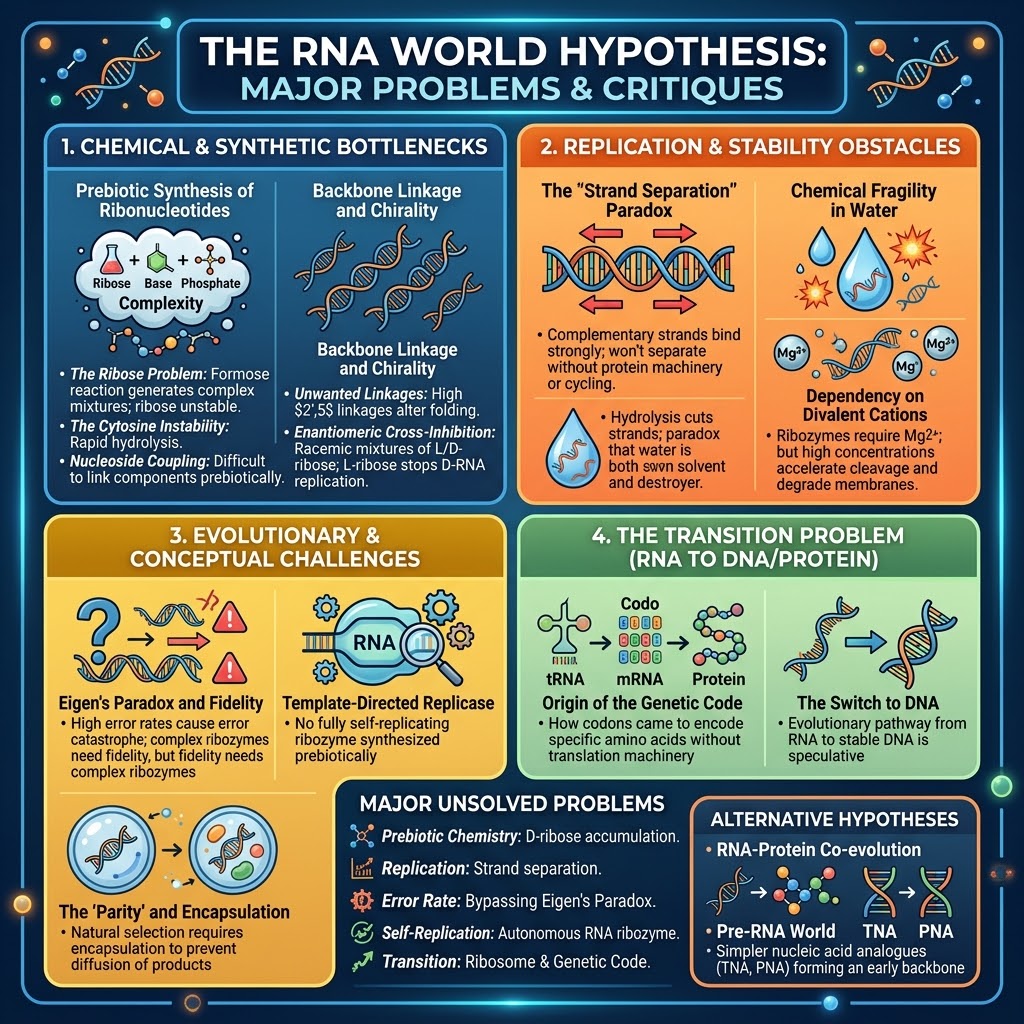
The RNA World Hypothesis proposes that early life passed through a phase where RNA performed both functions necessary for life: storing genetic information (like DNA) and catalyzing biochemical reactions (like proteins).
While it remains one of the most prominent origins-of-life theories, it faces major chemical, physical, and conceptual hurdles. Below is an overview of the core critiques, chemical obstacles, and unsolved problems facing the hypothesis.
1. The Chemical & Synthetic Bottlenecks
Prebiotic Synthesis of Ribonucleotides
RNA is composed of a ribose sugar, a phosphate group, and four nucleobases (Adenine, Guanine, Cytosine, Uracil). Synthesizing these component parts under prebiotic conditions—and linking them together correctly—is notoriously difficult.
- The Ribose Problem: Prebiotic reactions like the formose reaction generate a complex, messy mixture of sugars, of which D-ribose is only a minute fraction. Ribose is thermally unstable and degrades rapidly in warm environments.
- The Cytosine Instability Problem: Cytosine is chemically fragile. It undergoes rapid hydrolysis (deamination) into uracil, making its accumulation in a prebiotic ocean unlikely over long periods.
- Nucleoside Coupling: Joining a nucleobase directly to a ribose ring via a glycosidic bond with high yield and correct stereochemistry (beta-isomer) has proven nearly impossible under standard “prebiotic soup” conditions without carefully orchestrated laboratory steps.
Backbone Linkage and Chirality
- Unwanted Linkages (2′,5′ vs 3′,5′): When RNA polymerizes without modern biological enzymes, it frequently forms 2′,5′-phosphodiester linkages alongside the biologically required 3′,5′-linkages. High proportions of 2′,5′ linkages alter RNA folding and reduce catalytic function.
- Enantiomeric Cross-Inhibition: Prebiotic chemistry produces equal amounts of left-handed (L) and right-handed (D) ribose sugars (a racemic mixture). Modern biology uses D-ribose exclusively. In lab experiments, incorporation of L-ribose into a growing D-RNA chain halts replication (enantiomeric cross-inhibition).
2. Replication & Stability Obstacles
The “Strand Separation” Paradox
For an RNA molecule to act as a template, it must be copied. However, once a complementary strand is synthesized, the two strands bind strongly to form a stable double helix. Under prebiotically plausible temperatures and salt concentrations, the strands rarely separate spontaneously without protein machinery (like helicases) or extreme thermal cycling, preventing the template from being copied again.
Chemical Fragility in Water
RNA is susceptible to hydrolysis, particularly in the presence of water and elevated temperatures. The 2′-hydroxyl (-OH) group on the ribose ring acts as a nucleophile that can attack the adjacent phosphodiester backbone, severing the strand. This creates a paradox: RNA needs water as a solvent to function and copy itself, but water constantly degrades RNA.
Dependency on Divalent Cations
Most catalytic RNA molecules (ribozymes) require divalent metal ions—primarily Magnesium (\text{Mg}^{2+})—to fold into active 3D structures and catalyze reactions. However, high concentrations of \text{Mg}^{2+} accelerate the rate of RNA cleavage/degradation and degrade fatty acid membranes, making primitive cell encapsulation difficult.
3. Evolutionary & Conceptual Challenges
Eigen’s Paradox and Fidelity
In the absence of proofreading enzymes, primitive RNA replication suffers from high error rates (mutation rates).
- If the mutation rate is too high, a population of RNA molecules cannot maintain its functional sequence information across generations, resulting in an “error catastrophe.”
- To increase replication fidelity, you need a larger, more complex RNA replicase ribozyme.
- However, to maintain a sequence long enough to code for a complex ribozyme, you already need high fidelity. This creates a circular “catch-22.”
The “Template-Directed Replicase” Problem
In an RNA World, an RNA ribozyme must act as a replicase—an enzyme capable of copying other RNA molecules (and copying itself). While researchers have engineered ribozymes that can copy short templates, a fully self-replicating ribozyme capable of copying long, complex structures under prebiotic conditions has not yet been synthesized or discovered.
The “Parity” and Encapsulation Problem
For natural selection to act on a ribozyme, its chemical outputs must benefit itself rather than diffusing away to benefit competing molecules. This requires physical encapsulation (such as lipid vesicles/protocells). Coordinating RNA replication with membrane growth and cell division remains an active, unsolved area of study.
4. The Transition Problem (RNA to DNA/Protein)
The RNA World model requires two major evolutionary leaps that lack clear, step-by-step chemical pathways:
- The Origin of the Genetic Code: How did a system of arbitrary 3-base codons (RNA) come to encode specific amino acids (proteins) without a pre-existing translation machine (the ribosome)?
- The Switch to DNA: DNA requires deoxyribose (synthesized in modern cells via complex ribonucleotide reductase enzymes) and thymine (requiring methylation). The evolutionary pathway by which RNA offloaded its genetic role to DNA remains speculative.
Major Unsolved Problems
- Prebiotic Chemistry: How pure D-ribose and stable cytosine accumulated without laboratory intervention.
- Replication: How to separate complementary RNA strands without protein helicases or destructive heat.
- Error Rate: How early RNA bypassed Eigen’s Paradox without proofreading mechanisms.
- Self-Replication: Identifying a fully autonomous, self-replicating RNA ribozyme that operates in prebiotic conditions.
- Transition: Explaining the origin of the ribosome and the genetic code without assuming pre-existing proteins.