This image highlights a common, satirical summary of Christian theology, but from a mainstream Christian perspective (Trinitarianism), it oversimplifies and misrepresents the doctrine of the Incarnation and Atonement.
Here is how mainstream Christian theology breaks down the concepts involved in that question:
1. “God sent himself down… to become his own son”
The Oversimplification: This phrasing assumes Modalism (or Sabellianism)—an ancient view rejected by mainstream Christianity which holds that God is a single person who simply shifts roles or “wears different masks” (Father, Son, Spirit).
The Christian View: The doctrine of the Trinity states that God is one God in three distinct Persons: God the Father, God the Son (Jesus Christ), and God the Holy Spirit. They share the exact same divine essence, but the Father is not the Son, and the Son is not the Father. So, the Father sent the Son; God did not literally “become His own Son.”
2. “To sacrifice himself to himself”
The Oversimplification: It frames the sacrifice as a strange internal transaction where God appeases a arbitrary urge of His own.
The Christian View: In Christian theology (particularly views like Substitutionary Atonement), God’s character involves both perfect justice and perfect love:
Justice: Sin carries a real moral weight and consequence (separation from God/death). God cannot simply ignore or sweep evil under the rug without compromising perfect justice.
Love: Rather than requiring humanity to pay the penalty it could never satisfy, God takes the burden upon Himself. The Son willingly absorbs the consequence of human sin on the cross to satisfy the demands of divine justice while offering mercy.
3. “Just to convince himself to forgive us?”
The Oversimplification: It presents God as reluctant or needing to “trick” or “persuade” Himself into being forgiving.
The Christian View: In Christian teaching, God didn’t need to be convinced to love humanity—love was the motivation from the very start. As John 3:16 states, “For God so loved the world that he gave his only begotten Son…” The sacrifice wasn’t to change God’s heart toward humans, but to provide a righteous, legal, and moral framework for reconciling humanity to God without ignoring moral wrongdoing.
In short: As a meme critique of Modalism, it makes a logical point. But as a characterization of traditional Christian doctrine, it collapses distinct personal relationships within the Trinity and misinterprets the relationship between God’s justice and love.
TINSA (Trauma-Induced Sexual Addiction), a neurobiological treatment model created by Dr. Michael Barta, treats compulsive sexual behaviors by targeting the underlying autonomic nervous system dysregulation caused by developmental trauma. Rather than focusing solely on symptom containment (abstinence), the TINSA framework utilizes a specialized collection of trauma-informed and neuro-experiential techniques across its three distinct stages of recovery:
These core techniques bypass the analytical “thinking brain” to access the “reactive brain” where traumatic memories and nervous system triggers are physically stored.
Brainspotting (BSP): The primary trauma protocol used in TINSA. Practitioners guide the client’s gaze using a pointer to locate specific eye positions (“brain spots”) that correspond to physical, somatic tension or distress. Holding this visual fixation allows the brain to process deep-seated, subconscious trauma without requiring detailed verbal recollection.
Somatic Experiencing & Tracking: Clients are trained to pinpoint and describe physical, bodily sensations (e.g., chest tightness, heart racing) to map out how their nervous system responds to trauma triggers and addictive urges.
Eye Movement Desensitization and Reprocessing (EMDR): Used to integrate bilateral stimulation (left-to-right brain activation) to help process severe childhood wounds, such as abandonment or abuse, reducing the emotional charge of those memories.
The initial phase focuses on shifting the client from self-blame to neurological understanding.
Nervous System Mapping (Psychoeducation): Teaching the client the mechanics of their autonomic nervous system (ANS) and how early trauma hijacked their dopamine-reward pathways.
Arousal Self-Regulation Tools: Concrete coping mechanisms drawn from Dialectical Behavior Therapy (DBT)—specifically mindfulness, distress tolerance, and emotional regulation techniques—to safely de-escalate “fight-or-flight” states without turning to compulsive behaviors.
This phase addresses internal psychology, behavioral containment, and generational patterns.
Internal Family Systems (IFS) / Parts Work: Identifying and dialoguing with different “parts” of the self (such as the addictive part acting as a protector, or the isolated “inner child”) to alleviate deep shame and self-imposed isolation.
Three-Tiered Boundary Mapping: Establishing a structured relapse-prevention framework:
Inner Boundaries: Definition of problematic acting-out behaviors to completely avoid.
Middle Boundaries: Tracking and managing near-miss triggers, situations, or behavioral warning signs.
Outer Boundaries: Healthy lifestyle habits, hobbies, and self-care that reinforce recovery.
Genograms (Intergenerational Trauma Analysis): Constructing detailed family trees to visually trace how core values, relationship dynamics, and unspoken behavioral expectations were passed down through generations.
The final stage shifts the client away from hyper-isolated self-reliance toward healthy, interpersonal bonding.
Grounded Group Therapy: Engaging with peers in recovery using strict rules of radical transparency and honesty to break down denial, dismantle shame, and practice interpersonal vulnerability.
Parallel Partner Support & Empathy Restoration: Integrating dedicated therapeutic support for the partner. This includes structured disclosure preparation and boundary work aimed at addressing betrayal trauma and safely rebuilding mutual relational safety.
SMART Recovery (Self-Management and Recovery Training) is a secular, science-backed program that is highly effective for both substance abuse and behavioral addictions, including compulsive sexual behavior and sex addiction.
Instead of the traditional 12 steps, the SMART Recovery Handbook is structured around a 4-Point Program. It is designed to help you understand what drives your behavior, gain control over your actions, and build a satisfying life outside of the addiction.
Here are the main steps and core tools from the SMART handbook, adapted to navigating recovery from sexual addiction:
Point 1: Building & Maintaining Motivation
Recovery begins with understanding why you want to change. Because compulsive sexual behavior often functions as an instant “mood changer” or escape from reality, finding lasting internal motivation is crucial to breaking the loop.
Cost-Benefit Analysis (CBA): You write down the short-term and long-term pros and cons of both continuing the sexual behavior and stopping it. This helps you clearly see how temporary physical relief (the “erotic haze”) is outweighed by long-term costs like broken trust, guilt, or loss of time.
Hierarchy of Values (HOV): You identify your top 5 most important life values (e.g., honesty, healthy relationships, career, self-respect). Comparing these values against your addictive behavior highlights how acting out directly betrays what you care about most.
Point 2: Coping with Urges
Urges and cravings are a normal, inevitable part of the rewiring process. Point 2 focuses on realizing that while an urge to act out can feel overwhelming, you do not have to act on it, and it will pass.
The DEADS Tool: A primary strategy used to handle intense urges in the moment:
Delay: Agree to wait 10 to 15 minutes before acting. Urges peak and then naturally subside if you don’t feed them.
Escape: Physically leave the triggering environment (e.g., close the laptop, step away from your phone, go to a different room).
Accept: Acknowledge the urge without judging yourself. It’s just a wave of dopamine-seeking behavior, not a command.
Distract: Engage your mind in a completely unrelated, absorbing activity.
Substitute: Replace the harmful behavior with a safe, healthy one.
Urge Log: Tracking your urges helps you identify your specific patterns, triggers (e.g., fatigue, loneliness, specific apps), and which tools worked best to defuse them.
Point 3: Managing Thoughts, Feelings, and Behaviors
Many people turn to compulsive sexual behavior to anesthetize painful emotions like anxiety, stress, or shame. SMART teaches you how to manage the uncomfortable feelings that trigger the desire to escape.
The ABC Tool (REBT/CBT-based): This helps you break down the cognitive chain reaction that leads to acting out:
A (Activating Event): The trigger (e.g., having a stressful day at work).
B (Beliefs): Your automatic thoughts about the event (e.g., “I can’t handle this stress, I need an escape right now”).
C (Consequences): The emotional and behavioral outcome (feeling anxious, leading to acting out).
D (Dispute): Challenging those automatic beliefs (e.g., “Is it true I can’t handle this? I’ve survived stressful days before without acting out”).
E (Effective New Belief): Creating a healthier approach (e.g., “This stress is uncomfortable, but temporary. I can manage it by taking a walk instead”).
Point 4: Living a Balanced Life
Active addiction consumes a massive amount of time, energy, and focus. When you step away from it, you are often left with a feeling of emptiness. Point 4 is about filling that space with meaningful, healthy pursuits.
VACI (Vital Absorbing Creative Interest): Finding positive hobbies, projects, or goals that fully capture your attention, bring you genuine joy, and help rebuild your dopamine system naturally.
Lifestyle Balance Pie: A visual assessment tool used to review different areas of your life (relationships, health, career, leisure) to see where you are out of balance and where you want to redirect your energy.
A Note on SMART Meetings: Unlike some groups, you are never required to share explicit or graphic details of your behaviors in a SMART meeting. You are always welcome to keep things general by referring to your challenges simply as “my behavior,” “acting out,” or “my primary challenge,” allowing you to focus entirely on the cognitive tools for healing.
Below are specific CBT techniques and statements that CSAT-certified clinicians commonly use for compulsive sexual behavior:
Thought Record Framework
CBT uses structured thought-record worksheets. You document:
The Cue (trigger)
Automatic Belief (thought that pops up)
Emotional Intensity (rate 1-10)
Resulting Behavior
Then you challenge and restructure the thought.
Common Automatic Thoughts & Restructured Statements
Automatic Thought
Restructured Alternative
“I have to watch porn/masturbate to feel good”
“I can experience relaxation and satisfaction by reading, exercising, or calling a supportive friend, which aligns with my values and long-term goals.”
“This urge is unbearable—I need to act on it”
“Urges are uncomfortable but temporary. I can let this feeling pass without acting on it.”
“One time won’t hurt—I’m already stressed”
“Each time I act reinforces the pattern. Staying consistent with my recovery goals serves me better than short-term relief.”
“I’m weak—I’ll never control this”
“Recovery is a skill that strengthens with practice. Each moment I choose differently builds resilience.”
“Everyone looks at attractive people—it’s normal”
“Noticing attraction is normal; acting compulsively on every urge isn’t serving my wellbeing.”
“I don’t deserve better”
“I deserve respect for myself and my long-term health, even when urges feel overwhelming.”
Specific CBT Challenging Questions
Therapists teach clients to ask themselves:
“What evidence shows that I can feel good without acting on this urge?”
“What evidence shows this will actually solve the problem I’m facing right now?”
“Is this thought based on fact or feeling?”
“Would I say this thought to a friend in my situation?”
“What would happen if I waited 10 minutes before deciding?”
Coping Plan Examples
After restructuring thoughts, you develop concrete action steps:
“Take a 10-minute mindfulness pause before making any decisions”
“Call a sponsor or supportive friend when urge intensity reaches 7/10”
“Engage in a hobby or physical activity for 15 minutes”
“Use a distraction technique (count backwards, name 5 things you see)”
Common Cognitive Distortions CSATs Watch For
According to addiction resources, these irrational thought patterns frequently appear:
“All-or-nothing” thinking (e.g., “I already slipped, so I might as well go all the way”)
Overgeneralization (e.g., “This always happens to me”)
“Should” statements (e.g., “I shouldn’t have this urge”)
Emotional reasoning (e.g., “I feel desperate, so I must be desperate”)
Important Note
These statements work best when practiced regularly—not just during crises. Many therapists recommend writing your own personalized versions of these statements and keeping them accessible (phone note, printed card) for when urges hit.
The key insight from CBT research: “People in CBT for addictions have half the number of relapses as those in traditional talk therapy.” The structured, skills-based approach matters.
The 12-step process for sex addiction is modeled closely after the original program created by Alcoholics Anonymous, adapted specifically to address compulsive sexual behavior. It provides a structured framework for individuals seeking recovery, emphasizing self-reflection, accountability, and community support.
Groups like Sex Addicts Anonymous (SAA) and Sexaholics Anonymous (SA) utilize these steps, though definitions of sobriety can vary depending on the specific fellowship.
The 12 Steps
Step 1: Admission Honesty We admitted we were powerless over our addictive sexual behavior—that our lives had become unmanageable.
Step 2: Hope Open-mindedness Came to believe that a Power greater than ourselves could restore us to sanity.
Step 3: Surrender Willingness Made a decision to turn our will and our lives over to the care of God as we understood God.
Step 4: Inventory Courage Made a searching and fearless moral inventory of ourselves.
Step 5: Confession Integrity Admitted to God, to ourselves, and to another human being the exact nature of our wrongs.
Step 6: Readiness Acceptance Were entirely ready to have God remove all these defects of character.
Step 7: Humility Humility Humbly asked God to remove our shortcomings.
Step 8: Amends List Compassion Made a list of all persons we had harmed, and became willing to make amends to them all.
Step 9: Restitution Justice Made direct amends to such people wherever possible, except when to do so would injure them or others.
Step 10: Maintenance Perseverance Continued to take personal inventory and when we were wrong promptly admitted it.
Step 11: Connection Spiritual Growth Sought through prayer and meditation to improve our conscious contact with God as we understood God, praying only for knowledge of God’s will for us and the power to carry that out.
Step 12: Service Charity Having had a spiritual awakening as the result of these steps, we tried to carry this message to other sex addicts and to practice these principles in all our affairs.
Key Differences in Sex Addiction Recovery
Unlike substance abuse programs where the goal is total abstinence from the substance, recovery from sex addiction looks a bit different:
Defining Sobriety: Because sex is a natural human behavior, total celibacy isn’t always the end goal. In fellowships like SAA, members define their own “inner circle” behaviors (the compulsive acts they want to stop, such as compulsive pornography use, anonymous encounters, or dangerous behaviors) in consultation with a sponsor.
The Spiritual Component: While the steps use the word “God,” 12-step programs stress that this can be any “Higher Power” of an individual’s choosing, including the support group itself or a secular concept of the universe.
A Tool, Not a Cure: The 12 steps are widely used as a peer-support tool, but medical professionals frequently recommend pairing them with specialized therapy, such as Cognitive Behavioral Therapy (CBT) or working with a Certified Sex Addiction Therapist (CSAT), to address underlying trauma or mental health factors.
there are several anonymous online options. Here’s what’s available:
12-Step Fellowships with Online/Phone Meetings (Free & Anonymous)
These all operate similarly to AA — you can attend using only a first name, no registration required, and they offer virtual meetings via phone, video, or chat:
Sex Addicts Anonymous (SAA) — saa-recovery.org
Offers web-based and phone meetings daily, worldwide
You can attend without sharing personal info
They’ll refer you to a meeting that fits your schedule
Sex and Love Addicts Anonymous (SLAA) — slaafws.org
Focuses on both sex and love/relationship addiction
Also hosts virtual meetings
Sexaholics Anonymous (SA) — sa.org
Maintains an international directory of online meetings
Same 12-step model
Sex and Porn Addicts Anonymous (SPAA) — spaa-recovery.org
Specifically addresses both sex and porn addiction together
Offers web-based meetings (e.g., their Chicago group)
Sexual Recovery Anonymous (SRA) — sexualrecoveryanonymous.org
Another fellowship option with virtual meetings
Other Useful Resources
Bill Herring’s compiled list (billherring.com/sex-addiction-support-forums) — a curated, no-cost directory of phone and online support forums for both addicts and partners. This is a great starting point if you’re not sure which group fits.
SMART Recovery (smartrecovery.org) — Not sex-specific, but offers online meetings based on cognitive-behavioral techniques rather than 12 steps. Some people prefer this approach. They also have online message boards.
A Few Practical Tips for Starting Out
You don’t have to speak at your first meeting. You can just listen. Most meetings welcome newcomers who stay silent.
Try a few different fellowships. Each has a slightly different focus and culture — what clicks for one person may not click for another.
Phone meetings are the most anonymous option — no camera, no username needed beyond a first name.
These are all free. No insurance, no payment, no paperwork.
The hardest part is usually logging into that first meeting. But everyone in that room was once sitting exactly where you are now — feeling the same hesitation. You don’t have to figure this out alone.
Breaking Mental Loops
What’s happening: Intrusive mental rehearsal occurs when your brain replays an image or experience repeatedly, trying to “finish” what it started. It’s part of the reinforcement cycle in compulsive behavior — the brain got a dopamine spike and keeps seeking more by holding onto the memory.
Immediate interruption techniques:
Label it — say aloud or internally, “this is an intrusive thought” or “my brain is looping.” Naming creates distance between you and the thought.
Grounding (5-4-3-2-1) — name 5 things you see, 4 things you feel physically, 3 things you hear, 2 things you smell, 1 thing you taste. This forces your nervous system back into the present moment.
Change your physical state — cold water on your face, stand up and walk, grip something textured. The brain struggles to hold the image when your body shifts engagement.
Scheduled worry time — tell yourself “I’ll think about this at a specific time for 10 minutes, not now.” Urgency often drops when you defer it.
Why shame makes it worse: Guilt releases stress hormones. The brain then seeks relief from that stress — often by returning to the original dopamine source. The shame fuels the loop rather than stopping it.
Urge Management
Urge Surfing
Urges behave like ocean waves — they build, peak, and then crash. Most urges last 15–30 minutes if you don’t feed them. The technique is to “surf” the wave rather than fight it:
Notice the urge without judging it: “I’m feeling an urge right now.”
Observe where you feel it in your body — tension, restlessness, heart rate.
Track whether it’s rising, peaking, or falling.
Remind yourself: this will pass on its own.
Don’t argue with it, don’t negotiate, don’t reason with it. Just watch it.
Fighting the urge directly often strengthens it. Observing it without acting weakens it.
Play the Tape Forward
When an urge hits, mentally fast-forward through what happens if you act on it — not just the moment of acting, but the aftermath. The guilt, the shame spiral, the damage to relationships, the setback in recovery. Then contrast that with how you’ll feel if you ride it out: proud, grounded, still on track.
HALT Awareness
Urges are stronger when you’re:
Hungry
Angry
Lonely
Tired
Check in with yourself when an urge hits. If one of these applies, addressing the underlying need (eat, talk to someone, rest) can significantly reduce the urge’s intensity.
Trigger Mapping
Over time, identify your common triggers — situations, emotional states, times of day, environments. Once you know your patterns, you can:
Avoid unavoidable triggers with a plan (sunglasses, conversation partner, exit strategy)
Prepare coping responses in advance for predictable triggers
Recognize early warning signs before the urge peaks
Replacement Behaviors
Have go-to actions ready for when urges hit:
Physical exercise (push-ups, a walk)
Call or text someone in your support network
Engage your hands (cooking, drawing, building something)
Cold exposure (splash water, hold an ice cube — the shock interrupts the neurological pattern)
Delay, Don’t Deny
Instead of saying “I’ll never do this again” (which feels impossible in the moment), say “I won’t act on this for the next 15 minutes.” After 15 minutes, reassess. Breaking it into small windows makes it manageable and most urges dissipate within that window.
Mindfulness Meditation
Regular practice — even 5–10 minutes daily — strengthens the brain’s ability to observe thoughts without being controlled by them. Apps like Headspace, Calm, or Insight Timer have free guided sessions. Over time this builds the exact skill needed for urge surfing: noticing a thought arise and letting it pass without engaging.
These are skills, and like any skill they get stronger with practice. Nobody masters them on day one. The goal is progress — catching the urge a little earlier, riding it out a little longer, bouncing back faster each time
Therapeutic Alternatives
Thought labeling — “my brain is highlighting attractiveness right now” (observing without judging)
Normalization — “people are naturally drawn to certain features; that doesn’t mean I have to act”
Reality-checking the story — not the physical person, but the narrative (“I need to look at more” = false story)
On Reading a Study Bible
This can function as a coping technique, though it depends on your personal beliefs and goals:
Potential Benefits:
Values alignment — reinforces the moral/spiritual framework you’re trying to live by, which can strengthen commitment to change
Distraction and immersion — engages your mind in a way that displaces rumination
Comfort and grounding — many people find spiritual reading calming and centering during distress
Community connection — if you’re part of a faith community, this can connect you to additional support
Things to Consider:
Works best for people whose spiritual life is genuine to them (not just using religion as a suppression tool)
Some recovery traditions (like SAA) are spiritually oriented, while others (like SMART Recovery) are secular
If this feels like moralizing yourself into shame rather than grounding yourself in meaning, it may backfire
It’s a legitimate tool if it aligns with your values and helps you feel anchored rather than judged.
What You’re Experiencing
Your brain has built well-worn neural pathways around seeking visual sexual stimulation. Every time you look, scroll, or seek out images, you reinforce those pathways. Wanting to see more isn’t a moral failure — it’s your brain doing what it’s been trained to do. The craving is real and it’s powerful.
But here’s the hard truth: that desire won’t disappear through willpower alone. You can’t white-knuckle your way out of a neurological pattern. Recovery is about rewiring, not just resisting.
What Actually Changes the Pattern
1. Starve the pathway. Every time you look something up online or linger on someone, you’re feeding the loop. Every time you don’t, the pathway weakens slightly. It’s not about one dramatic moment of quitting — it’s about hundreds of small refusals that gradually rewire the brain. This is uncomfortable and the urge will spike before it fades. That’s withdrawal, and it means it’s working.
2. Put barriers between you and the behavior. Willpower fails when the trigger is one click away. Add friction:
Content blockers on your devices (Covenant Eyes, Freedom, cold turkey block lists)
Keep your phone in another room when you’re alone
Disable private browsing
If you have someone you trust, accountability software that reports activity
3. Address what’s underneath. The urge to seek out visual stimulation is rarely just about the images. Common underlying drivers include:
Stress or overwhelm
Emotional disconnection or loneliness
Boredom or understimulation
Anxiety, depression, or exhaustion
Feeling like you’re losing freedom or identity in a role
When the urge hits, ask yourself: “What am I actually feeling right now?” Often the answer isn’t sexual — it’s emotional.
4. Fill the gap. If you remove the behavior without replacing it, the void gets filled with rumination and stronger urges. You need alternative dopamine sources:
Physical activity (this is one of the most effective interventions)
Learning something new
Creative hobbies
Social connection (even just texting a friend)
5. Get into a structured program. I mentioned this before, and I want to emphasize it again — almost no one breaks this cycle alone. Whether it’s SAA, SLAA, SMART Recovery, or a therapist (especially a CSAT), having structure, accountability, and a framework dramatically increases success. The online meetings I listed are anonymous and free.
A Difficult But Necessary Truth
Recovery from this isn’t about never finding someone attractive again. That’s not realistic and it’s not the goal. It’s about getting to a place where:
You notice the attraction
It doesn’t hijack your behavior
You choose what to do with your attention
The urge doesn’t control your next move
That takes time, practice, and support. People do get there. But it starts with accepting that this is bigger than willpower and reaching for real tools — barriers, community, and professional help if possible.
Right now the most important thing is the next decision. Not forever. Not “I’ll never look again.” Just: what do I do in the next hour? Can you put the phone in another room, do something physical, and ride out whatever comes up?
Complete Picture
Think of it like this:
Study Bible = internal tool (values, focus, meaning) Barriers/Accountability = external protection(makes acting on the urge harder) Support Group/Therapy = long-term rewiring(builds new patterns over months)
All three together are stronger than any one alone.
The Longer-Term View
Avoidance works temporarily, but eventually you’ll have to navigate the world with your eyes open. The sooner you build skills for handling triggers without acting, the more resilient your recovery becomes.
Many people in sex addiction recovery find that:
Initially, they avoid triggers heavily
Then they learn to coexist with them
Finally, they notice them less automatically as the brain rewires
You’re building that capacity. Start where you feel safe, and expand gradually.
Mental Technique During Exposure:
When you notice an attractive person:
Acknowledge it neutrally: “There’s an attractive woman.”
Don’t judge yourself for noticing.
Deliberately shift focus: to your breath, your footsteps, your workout form, or whatever you planned.
If the thought lingers, remind yourself: “Noticing is fine. Acting is my choice.”
This turns exposure into practice rather than punishment.
Reframe the Goal
The objective isn’t never seeing anyone attractive again— that’s unrealistic and sets you up for frustration. The objective is:
Seeing someone and choosing not to act on it.
Every time you walk past, see an attractive person, and continue walking without engaging, you’re strengthening a new neural pathway. It’s resistance training for your impulses.
Each time you don’t act on the urge, you are:
Weakening the old pathway — The neural circuit that says “See attractive woman → feel urge → seek out images” fires less strongly when you interrupt the sequence at the end. Over time, that pathway gets physically pruned through neuroplasticity.
Strengthening a competing pathway — Each time you choose an alternative (walk away, read your Study Bible, breathe, call someone), you’re building a new connection: “See attractive woman → feel urge → pause and redirect.” Eventually that becomes more automatic than the old one.
Reducing the reward prediction error — Your brain expects dopamine when you act. When you don’t act, that expectation eventually adjusts downward. The craving loses intensity.
Important Nuance
It’s not just subtraction — it’s replacement:
Doing Nothing + Resisting
Active Substitution
“I won’t look”
“I’ll read 10 minutes instead”
White-knuckling the urge
Physically redirecting energy
Waiting it out passively
Engaging a different system
Active substitution tends to work better because your brain needs something to fill the void, not just absence.
The Timeline Realistically Looks Like This
Weeks 1-4: Urges spike higher, feels like fighting uphill
Months 2-3: Urges become less frequent, intensity drops
Months 6+: New pattern starts becoming default; noticing is easier than before
You won’t notice progress day-to-day. You’ll see it in weekly reflections. The first week feels harder than week three. By month three, the loop may still run, but you intercept it faster.
One More Thing Worth Knowing
Relapse doesn’t erase progress. Even if you slip:
The rewiring that happened before remains
Each subsequent attempt is easier than the last
What matters is getting back on track quickly, not perfection
People who stay in recovery are not people who never fall. They’re people who got up more times than they stayed down.
While it is relatively rare when professional sanitation standards are followed, a massage therapist can pass pathogens to a client through direct skin-to-skin contact, contaminated linens, or respiratory droplets. The most common diseases and pathogens that can be transmitted include:
1. Bacterial Infections
Bacterial infections are the most common risk if a therapist has a cut or lesion on their hands, or if the massage table and linens were not properly sanitized between clients.
Staph Infections & MRSA:Staphylococcus aureus (including the antibiotic-resistant strain MRSA) can be transferred from the therapist’s skin or contaminated sheets into a client’s microscopic micro-tears, cuts, or open pores. It typically starts as a painful, red bump that resembles a spider bite but can rapidly progress into a severe boil or deep abscess.
Impetigo: A highly contagious bacterial skin infection that causes red sores, which can rupture, ooze for a few days, and then form a yellowish-brown crust.
Folliculitis: Inflammation of the hair follicles, often caused by bacteria. Friction from the massage along with massage oils can push bacteria deeper into the hair follicles, leading to small, itchy, pus-filled bumps.
2. Fungal Infections
Fungi thrive in warm, moist environments, making massage oils and poorly laundered linens a potential vehicle.
Ringworm (Tinea Corporis): A highly contagious superficial fungal infection that presents as a red, itchy, circular rash with a clearer center. If a therapist has it on their hands or forearms, the physical friction can easily plant the fungus onto the client’s skin.
3. Viral Infections
Viruses can be transmitted through direct skin contact or through close proximity in an enclosed room.
Warts & Plantar Warts: Caused by the Human Papillomavirus (HPV), these can be transmitted if a therapist has an active, uncovered wart on their hand and rubs it against a client’s skin.
Herpes Simplex: While type 1 (cold sores) is typically facial, a therapist with an active, weeping herpetic lesion on their hand (herpetic whitlow) can pass the virus directly to a client’s skin.
Respiratory Viruses (Flu, Colds, COVID-19): Because massage requires spending an hour or more in close, face-to-face proximity, respiratory droplets from a coughing or sneezing therapist can easily pass airborne viral illnesses to a client.
4. Parasitic Infestations
Scabies and Lice: Scabies mites and body lice require prolonged skin-to-skin contact or contact with infested linens to migrate. If the sheets are not changed and washed in hot water between clients, these parasites can be passed onto the next person using the table.
How Professional Practices Prevent This
Legitimate, licensed massage therapists follow strict sanitation laws to completely eliminate these risks:
The “Pre-Session Scan”: Therapists visually inspect their own hands and arms, as well as the client’s skin, before touching.
Strict Hand Hygiene: Washing from fingertips to elbows with warm water and soap immediately before and after every single client.
One-and-Done Linens: Sheets and face cradle covers are stripped and replaced after every single session, then washed in hot water and detergent.
Disinfection: The leather or vinyl massage table itself is wiped down with a healthcare-grade disinfectant between appointments.
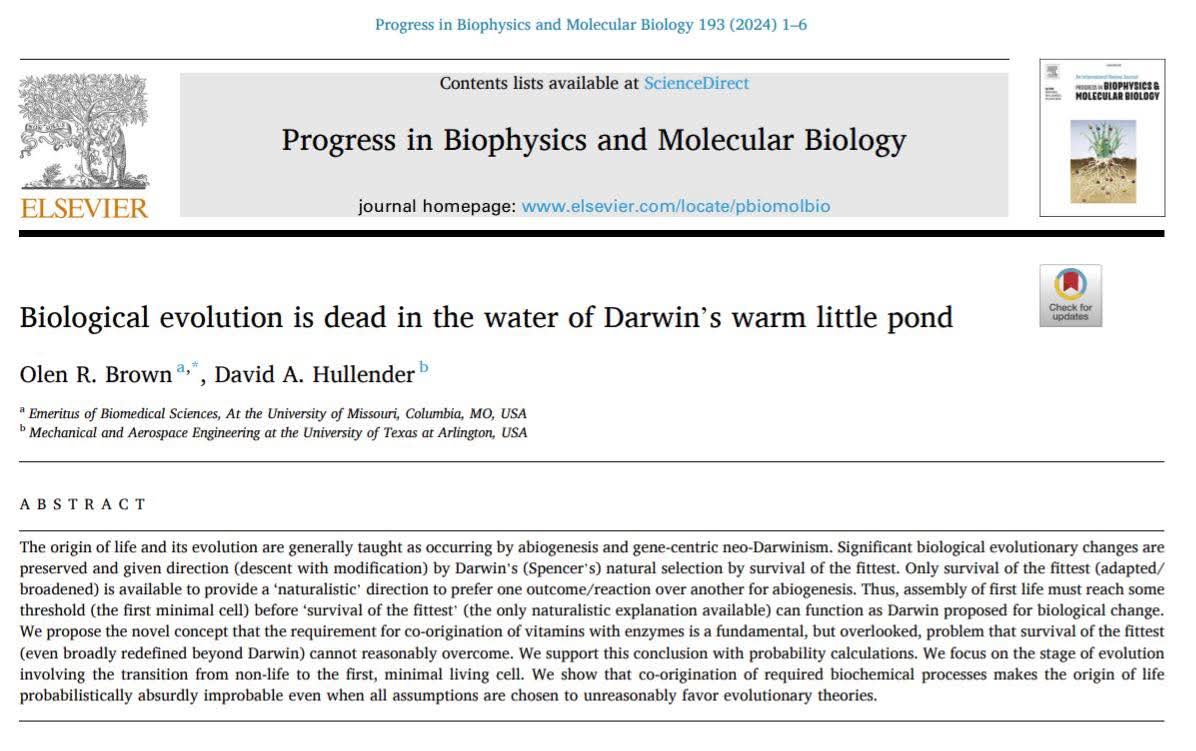
The Concept of Co-Origination: The authors introduce the novel argument that the transition from non-life to life requires multiple specific events to happen simultaneously in both time and space. The Enzyme-Vitamin Dilemma: Specifically, many essential biological enzymes cannot function without a corresponding coenzyme derived from a vitamin. For life to originate, both the complex enzyme and its required vitamin/coenzyme companion must emerge together. The Failure of Natural Selection: Because an enzyme without its cofactor (or vice versa) provides no survival advantage and represents a futile expenditure of energy, Darwinian survival of the fittest cannot select or preserve them individually. Natural selection is impotent during abiogenesis because it cannot recognize or save changes that only have future value.
Defining the Minimal Living Cell
To evaluate the likelihood of abiogenesis, the authors focus on the threshold of a modern minimal cell model, referencing Mycoplasma genitalium and the synthetic JCVI-syn3.0. For their calculations, they isolate a highly streamlined system consisting of 8 core biochemical processes (such as protein, DNA, RNA, and lipid synthesis), which require a total of 70 unique enzymes and 10 unique coenzymes.
Probability and Statistical Impossibility
Generous Assumptions: To test mainstream evolutionary doctrine, the authors choose highly generous, unrealistically favorable parameters—assuming a warm little pond already abiotically stocked with all required amino acids, nucleotides, lipids, and an energy source (ATP).
The Mathematical Verdict: Using mathematical models for an uninterrupted sequence of events required to build this minimal metabolic ensemble, the authors compute total probabilities based on varying ratios of generating an enzyme versus a coenzyme. Even under the most absurdly optimistic assumptions, the probability ranges from 1 in 10^227 down to 1 in 10^1137. The authors note that an exponent of 80 is sufficient to account for all particles in the known universe, rendering the naturalistic assembly of first life statistically impossible and absurdly improbable.
Conclusion
The authors conclude that mainstream biology must reboot its approach to evolutionary theory. They assert that time alone cannot serve as the hero of abiogenesis, and that the necessity for the co-origination of essential components deals a fatal blow to the concept of survival of the fittest as a mechanism for explaining the origin of life.
“Published Journal Article from Progress in Biophysics and Molecular Biology
Conclusions Calculated probabilities for the origin of life are absurdly improbable even when highly favorable assumptions are made. This agrees with the use of ‘absurd’ for probability statements by Eigen and that Wald (1954) found it necessary to use ‘miracles’ to justify his use of ‘impossible becomes possible’. The origin of life and its evolution cannot be ‘explained’ by a near-infinite sequence of minute changes given direction via selection by survival of the fittest. The death knell is the necessity for co-origination in space and in time, in one genome or perhaps two contiguous genomes (or whatever assumed the function before there was a genome) of all the structures and functions that are essential for life. The calculated probabilities reach absurd values as low as 1 chance in 10^1137 trials and rise to only one chance in 10^227 trials when one allows a coenzyme and an enzyme to be repeatedly created with an average absurdly high probability, respectively, of 1 in 10 to 1 in 1000 random trials. The exponents 1137 and 227 can be compared with exponents required for other large numbers: an exponent of 11 suffices for the number of stars in our galaxy and it is estimated that the exponent 80 is sufficient for all the particles in the universe. ‘Science’ has spent more than a century and a half worshiping at the altar of an idea that has few scientific clothes (surely no ensemble); we are on a yellow brick road leading only to a wonderful wizard. Like Alice we are not in Kansas anymore; natural selection is not natural but is given powers that are magical and miraculous. Natural selection, survival of the fittest and time are the great pretenders—they pretend we are doing well, but they pretend too much. We must reboot the computer called biological evolution. Time (even billions of years) is not the hero of the plot; however, for scientific understanding of biological evolution, time is of the essence.”
Citation: Contents lists available at ScienceDirect Progress in Biophysics and Molecular Biology journal homepage: www.elsevier.com/locate/pbiomolbio
Biological evolution is dead in the water of Darwin’s warm little pond Olen R. Brown a,* , David A. Hullender b a Emeritus of Biomedical Sciences, At the University of Missouri, Columbia, MO, USA b Mechanical and Aerospace Engineering at the University of Texas at Arlington, USA
The Islamic Dilemma is one of the most intense points of debate between Christian and Muslim scholars, because it forces a collision between 4th-century physical manuscripts and 7th-century theology. To understand why this causes such deep doubt for some, we have to look at the three facts you just laid out, and how both sides try to resolve them.
Fact 1: The Quran Affirms the Prior Scriptures
The Quran does not explicitly say “the Bible is a fake book.” In fact, it commands 7th-century Christians and Jews to look to their own scriptures for guidance:
Surah 5:47:“Let the People of the Gospel judge by what Allah has revealed therein.”
Surah 10:94: Allah tells Muhammad that if he is ever in doubt about his own revelation, he should “ask those who have been reading the Scripture before you.” The text uses the Arabic phrase ma’ahum (“with them”), strongly implying that the Christians living during Muhammad’s life had the authentic text in their hands.
Fact 2: The Physical Chain of Manuscripts
This is where history comes in. We have thousands of ancient Bible manuscripts, including massive, complete Bibles like the Codex Sinaiticus and Codex Vaticanus, which were written in the 300s CE—roughly 300 years before Islam ever began. Because we can compare copies from Egypt, Rome, Syria, and Greece, historians know exactly what the Bible said in the 7th century when Muhammad was alive. Those 7th-century Bibles are effectively identical to the Bibles we read today. They explicitly state that Jesus is the Son of God, that he died on a cross, and that he rose from the dead.
Fact 3: The Contradiction
Here is the core issue:
The Quran says the Gospel with the 7th-century Christians is true.
Physical history shows the Gospel with the 7th-century Christians claimed Jesus died on the cross as the Son of God.
The Quran explicitly denies that Jesus is the Son of God or that he died on the cross (Surah 4:157). If a Muslim accepts the historical integrity of the Bible manuscripts, they run into a wall: the Bible the Quran affirms directly contradicts the Quran.
How Islamic Scholars Respond
To resolve this, Islamic apologists and scholars generally rely on two main arguments:
1. The “Lost Original Book” Theory
Mainstream Islamic theology argues that the Injil (the Gospel) mentioned in the Quran is not the New Testament we have today (Matthew, Mark, Luke, and John). Instead, they believe the Injil was a single, literal book given directly to Jesus by God—much like the Quran was given to Muhammad. In this view, Jesus’s actual book was lost or severely corrupted by his followers very early on, and the four Gospels we have today are just human biographies written later, heavily altered by the Apostle Paul to introduce the idea of Jesus’s divinity.
2. Textual vs. Oral Corruption (Tahrif)
When the Quran accuses Jewish or Christian scholars of corrupting scripture, Islamic scholars point out that it often uses phrases like “they distort the Book with their tongues” (Surah 3:78). They argue that Tahrif (corruption) originally meant misinterpretation or hiding verses, rather than rewriting the physical ink on the pages. However, as the physical manuscript evidence became undeniable over the last few centuries, the mainstream Muslim view shifted to insisting that the actual text of the modern Bible must have been altered from its original form.
Why This Causes Doubt
For a Muslim who loves history and archaeology, the “Lost Original Book” theory can feel like a tough pill to swallow. It requires believing that a completely pure, original book of Jesus existed, but vanished from the face of the earth leaving absolutely zero archaeological or historical footprints—and that God allowed His own revelation to be entirely corrupted until the Quran arrived 600 years later. When a Muslim realizes that the Bibles in Muhammad’s day said the exact same things our Bibles say today, it forces a profound theological choice: either the manuscript timeline is wrong, or the Quran’s understanding of what the Christians possessed is wrong. This realization is frequently the exact moment a Muslim’s faith in Islam begins to unravel.
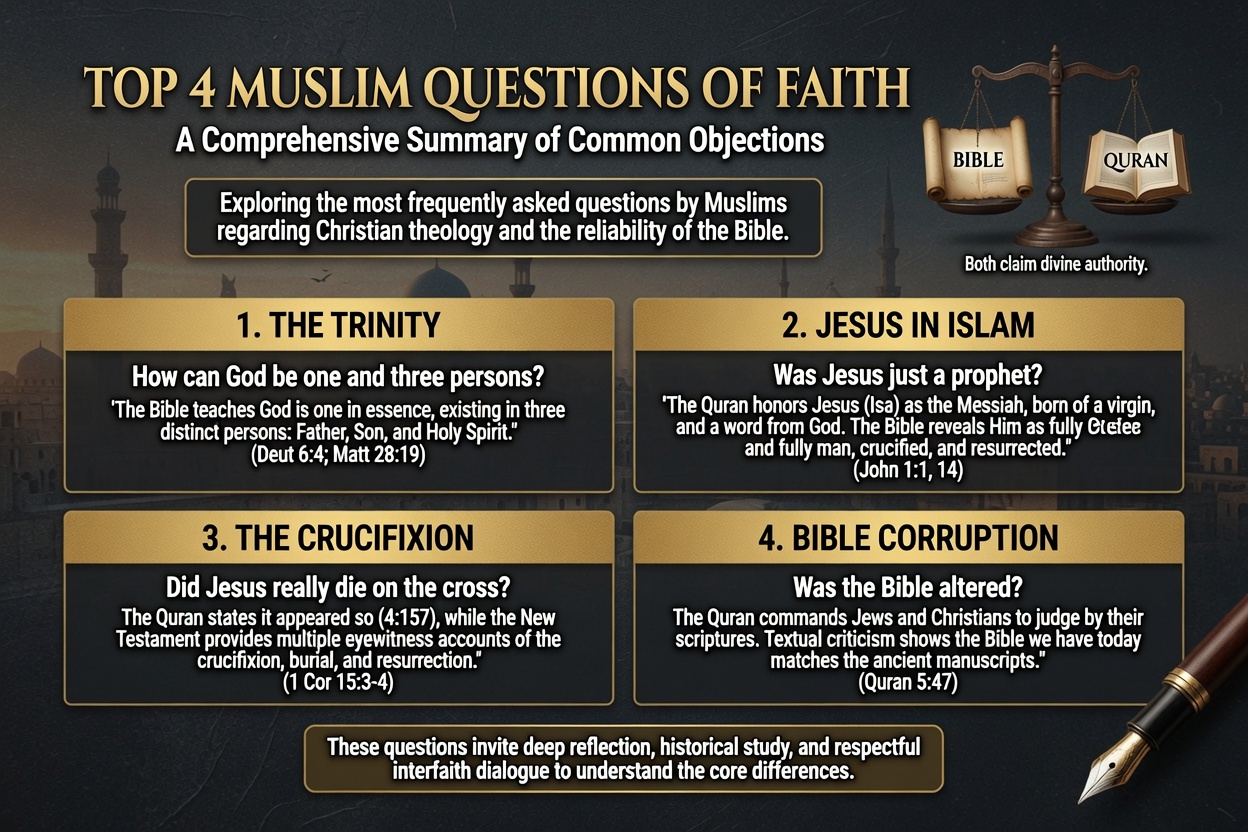
When Muslims experience a crisis of faith that leads them to explore or convert to Christianity, it usually isn’t a single question that flips a switch. Instead, it is typically a gradual shift driven by theological tensions, emotional experiences, or deep personal inquiries. In comparative religion and ministries that work with Muslim-background believers (MBBs), several core questions and themes consistently emerge as the primary catalysts for doubt and subsequent conversion.
1. Assurance of Salvation: “How can I know for sure if God accepts me?”
In mainstream Islamic theology, salvation is ultimately dependent on the will of Allah, paired with a person’s balance of good and bad deeds. Even a highly devout Muslim cannot definitively claim they are going to Paradise (Jannah), as doing so is often seen as assuming God’s judgment.
The Doubt: This can create a sense of spiritual anxiety or a feeling of being on a “treadmill” of religious performance, leaving people wondering if they have prayed, fasted, or repented enough.
The Christian Alternative: Christianity introduces the concept of grace and permanent assurance through the substitutionary atonement of Jesus (the belief that Jesus paid for human sins on the cross). The shift from “I hope I have done enough” to “It has already been done for me” is often the most profound theological turning point.
2. The Nature of God: “Is God a distant master or a loving father?”
While Islamic tradition heavily emphasizes God’s mercy and compassion, the fundamental framework of the relationship between God and humanity is that of Master (Rabb) and servant/slave (Abd). Calling God “Father” is strictly rejected in Islam, as it is viewed as compromising God’s transcendent majesty.
The Doubt: Some Muslims experience a deep longing for a personal, intimate relationship with the divine that feels difficult to achieve within a framework focused heavily on legalism and submission.
The Christian Alternative: The Christian concept of God as an intimate, approachable Father who desires a personal relationship—and who “first loved us” while we were still sinners—appeals deeply to those seeking personal spiritual connection.
3. Historical and Moral Consistency: “Who was the Prophet Muhammad vs. Who was Jesus?”
As Muslims grow older or gain access to broader historical resources (often via the internet or diaspora communities), some begin to critically examine the Hadith (the recorded sayings and actions of Muhammad).
The Doubt: Questions frequently arise regarding the moral complexities of Muhammad’s life, including his multiple marriages, his execution of military campaigns, or specific legal rulings. When compared to the peaceful, non-violent narrative of Jesus (Isa in Islam) presented in both the Quran and the New Testament Gospels, some find a stark contrast.
The Christian Alternative: Because Islam already holds Jesus in incredibly high regard as a sinless, virgin-born prophet who performed miracles and ascended to heaven, exploring his life further feels natural. When Muslims read the Gospels for themselves, Jesus’s teachings on radical forgiveness, loving one’s enemies, and elevating the marginalized often present a compelling moral alternative.
4. The Integrity of Scripture: “Has the Bible actually been corrupted?”
Traditional Islamic teaching maintains that the Christian and Jewish scriptures were Tahrif (corrupted or altered over time), and that the Quran arrived to correct those errors.
The Doubt: When textually curious Muslims begin looking into biblical archaeology, manuscript history, and textual criticism, many conclude that the New Testament has a highly reliable, deeply documented transmission history. If the Bible wasn’t corrupted, then its claims about Jesus being the Son of God who died on the cross directly contradict the Quran’s claim that he didn’t die.
The Christian Alternative: Realizing that the historical evidence supports the early transmission of Christian texts forces a choice between the historical record of the New Testament and the theological claims of the Quran.
The Role of Dreams and Visions
Beyond intellectual questions, a unique and widely documented phenomenon among Muslims who convert to Christianity is the role of dreams and visions. In Middle Eastern and South Asian cultures, dreams are taken very seriously as a legitimate medium for divine communication. Countless converts report having vivid, deeply peaceful dreams of a figure in white whom they intuitively understand to be Jesus, telling them to follow him or offering them comfort during a time of intense personal trial. These supernatural experiences frequently act as the catalyst that prompts them to seek out a Bible or visit a church in the first place.
I come to You acknowledging that I am a sinner and that my sins have separated me from You. I am truly sorry, and I repent of my past life.
I believe in my heart that Jesus Christ is Your Son, that He died on the cross for my sins, and that You raised Him from the dead on the third day. I confess with my mouth today that Jesus is my Lord and Savior.
Thank You for forgiving my sins by Your grace and granting me eternal life. Please fill me with Your Holy Spirit to guide me from this day forward.
When scientists or the public talk about “macroevolution” (large-scale evolutionary changes that occur over geological time, resulting in the formation of new species, genera, or families), they are often looking at two different things:
The overall fact of common descent, which is overwhelmingly proven by multiple independent lines of evidence.
The specific, step-by-step mechanical pathways of how every single complex trait or lineage split occurred, which is where the active, unproven frontiers of science lie. There is nothing in macroevolution that has been shown to be mathematically, physically, or biologically impossible. However, there are massive gaps in our knowledge, highly debated mechanisms, and complex biological transitions that we haven’t fully “proven” or mapped out yet. Here are the major areas where macroevolutionary science faces its biggest questions, missing pieces, and current limitations.
1. The Ultimate Frontier: The Origin of Life (Abiogenesis)
While technically a distinct field from evolution—evolution explains how life changes once it exists, while abiogenesis explains how life started—they are deeply intertwined in the public mind. We currently do not know how the very first self-replicating, living cellular structures arose from non-living chemicals.
What is missing: While we have proven that the building blocks of life (amino acids, RNA bases) can form spontaneously in primordial conditions, we have not yet proven the exact chemical pathway that links these loose molecules into a functioning, metabolizing protocell.
Does it look impossible? No. Fields like RNA-world research and hydrothermal vent chemistry show plausible pathways, but we currently lack a definitive, proven “recipe.”
2. “The Missing Steps” in the Fossil Record (Punctuated Equilibrium)
One of the oldest criticisms of macroevolution is the apparent lack of transitional fossils for certain species. If evolution is a slow, gradual accumulation of tiny changes, the fossil record should look like a perfectly smooth, continuous gradient. Instead, it often looks like a species appears suddenly, stays the same for millions of years, and then disappears.
The Scientific Explanation: Evolutionary biologists Stephen Jay Gould and Niles Eldredge proposed Punctuated Equilibrium. They argued that evolution happens rapidly in small, isolated populations (where transitions are rarely preserved as fossils) followed by long periods of stability.
The Unproven Element: Because fossilization is incredibly rare, we are missing the exact, generation-by-generation physical transitions for many lineages. We have spectacular transitional sequences for whales, horses, and birds, but for many other groups, we only have the “before” and “after” snapshots.
3. Explaining Sudden Bursts of Diversity (The Cambrian Explosion)
Roughly 540 million years ago, a massive variety of complex, multicellular animal phyla appeared in the fossil record in a relatively short geological window (around 20 million years). This is known as the Cambrian Explosion.
The Challenge: To some, the sudden appearance of radically different body plans (arthropods, mollusks, chordates) looked “impossible” under standard, slow Darwinian evolution.
What we are still proving: Scientists are still trying to prove which trigger was the primary driver. Was it an environmental trigger (a sudden rise in atmospheric oxygen), a genetic trigger (the evolution of Hox genes that dictate body layouts), or an ecological trigger (the invention of eyes and active predation)? It remains one of macroevolution’s most intensely studied puzzles.
4. Gaps in Mapping the “Genotype-to-Phenotype” Map
Thanks to modern genetics, we can compare the DNA of a chimpanzee and a human, or a land mammal and a whale, and pinpoint the genetic differences. However, knowing which genes are different is not the same as proving how those genetic changes physically altered the animal during its embryonic development.
The Frontier: The field of Evolutionary Developmental Biology (Evo-Devo) is currently trying to map out exactly how small mutations in “switch” genes (regulatory DNA) translate into massive physical changes in a growing embryo.
The Current State: We understand the broad strokes (like how the electric eel repurposed its muscle genes), but for the vast majority of complex evolutionary traits, we cannot yet write out the exact, definitive step-by-step genetic script that caused the structural transformation.
Why “Unproven” Does Not Mean “Impossible”
In science, there is a strict difference between an unsolved puzzle and an impossibility. Whenever a trait looks “irreducibly complex” (meaning it seems impossible for it to have evolved because removing any one part makes the whole system fail), closer inspection usually reveals a natural path. Just like the electric eel’s weapon started as a weak navigation tool, complex structures like the human eye or the blood-clotting cascade have been proven to develop through co-option (taking an old tool and using it for a new job) and gradual refinement. Macroevolutionary scientists do not claim to have a complete, step-by-step blueprint of every biological event over the last 3.8 billion years. What they do have is a robust framework where every new fossil, genetic sequence, and geographical discovery continues to validate the core mechanism of natural selection.